

Biodegradable Foam
Biodegradable Foam (Patent Pending)
As Sustainable Foam Pioneers, We’re Helping You Reduce Your Environmental Impact
The biodegradable foams we manufacture to customers’ specifications are stable and made to decompose when deposited in landfills(*). That process is called bioactive hydrolysis and consists of bacteria and fungus in the landfill soil consuming the foam. In contrast, traditional foams remain in landfills unchanged for hundreds of years while potentially degrading the quality of soil and groundwater. Independent laboratory testing has validated our patent pending biodegradable foam as an eco-friendly solution compared to traditional foams.
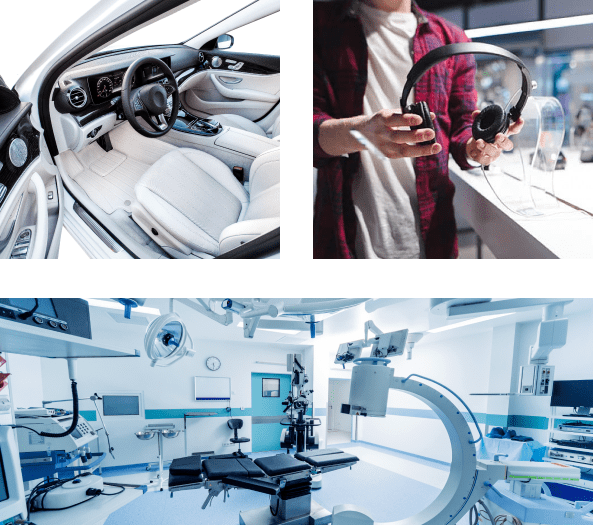
As a pioneer in the development of sustainable foam, our patent pending biodegradable products can be used as a substitute for traditional polyurethanes in a wide range of applications, including:
- Durable & Disposable Medical Padding
- Seat Cushions
- Electronics
Do Good While Doing Well
With growing awareness of the environmental impact of petroleum-based foams and plastics when they are disposed of in landfills(*), demand is increasing for biodegradable foams. Over 10 million tons of polyurethane (PU) foam are produced globally each year, with an estimated 20–30% ending up directly in landfills as scrap or post-consumer waste.
By working together, we can reduce the environmental footprint of foam waste and help drive the market toward more sustainable solutions. When you switch to biodegradable foams, you’re better equipped to meet your quality and productivity goals while doing your part to improve the health of our planet.

Click Here for more information on our biodegradable foams, complete with independent 3rd-party laboratory testing comparing biodegradation of Bergad’s biodegradable foam with traditional PU foam.
(*)Bergad Biodegradable Foams are biodegradable under anaerobic conditions in a laboratory setting according to ASTM D5511. The rate and extent of biodegradation may vary based on environmental conditions. Real world conditions may not replicate lab conditions and results may vary.